





The call from the hospital usually comes with relief and fear at the same time. “Your father is stable now. He can be discharged.” For a moment, the family feels like the worst is over. Then the doctor adds one more line: “But he’ll still need ICU-level monitoring at home for some time.”
Suddenly, relief turns into a hundred questions. What does that even mean? Can a home really replace a hospital ICU? Who will manage the ventilator, the tubes, the monitors? What if something goes wrong at 3 a.m.?
This confusion is common across Indian households today. As hospital stays get shorter and home healthcare becomes more advanced, more families are being introduced to a concept called ICU Care at Home. It sounds reassuring, but most people don’t actually know what it involves, who qualifies for it, and when it is genuinely safe.
This article is written to answer exactly that — clearly, honestly, and without exaggeration. Whether you are currently facing this decision or simply trying to understand it in advance, this guide walks through what ICU Care at Home really means in the Indian context, what it includes, who benefits from it, and when a hospital ICU is still the safer choice.
Please note: ICU Care at Home should always be initiated under the guidance and approval of the treating physician. It is not a replacement for hospital care in every situation — it is an extension of medical care into the home, for patients who are stable enough to benefit from it.
What is ICU Care at Home?
ICU Care at Home is a medically supervised healthcare service that brings intensive-care-level monitoring, equipment, and trained staff into a patient’s home. It typically includes an ICU-trained nurse, doctor oversight, monitoring devices, and emergency protocols, allowing critically ill but stabilized patients to recover in a familiar environment without needing to stay in a hospital ICU.
ICU Care at Home in India has grown out of a simple medical reality: many patients who are stabilized after surgery, a stroke, a cardiac event, or a long ICU stay do not need to remain inside a hospital ICU room. What they do need is continuous medical monitoring, skilled nursing, and access to the same kind of equipment used in hospitals — just delivered in a home setting.
This is different from routine home nursing. Home ICU Services are designed for patients who are still medically fragile. The service typically combines:
- ICU-trained or critical care nurses
- Doctor supervision and periodic visits
- Portable ICU-grade equipment (monitors, ventilators, oxygen concentrators, infusion pumps)
- A clear emergency response and hospital-transfer plan
- Coordination with the patient’s treating physician or hospital
The goal of Home ICU Services is not to avoid hospitals altogether. It is to give patients who no longer need to occupy a hospital ICU bed the same level of clinical attention in a more comfortable, personal, and often less expensive setting — while keeping a safety net in place.
What Does ICU Care at Home Actually Involve?

Understanding what ICU Care at Home actually involves helps families set realistic expectations. It is not just “a nurse at home.” It is a coordinated clinical system.
- Medical Team A home ICU setup typically includes a critical care nurse (often working in shifts for round-the-clock cases), a visiting or on-call doctor, and sometimes a physiotherapist or respiratory therapist depending on the patient’s condition.
- Equipment Depending on the patient’s needs, equipment may include cardiac monitors, pulse oximeters, ventilators or BiPAP machines, suction machines, oxygen concentrators, infusion pumps, and feeding equipment for patients who cannot eat normally.
- Monitoring Vital signs — heart rate, blood pressure, oxygen saturation, respiratory rate, and temperature — are tracked continuously or at frequent intervals, exactly as they would be in a hospital ICU.
- Emergency Protocols A responsible Home ICU Services provider will have a written emergency plan: what the nurse does if oxygen levels drop, who to call, and which hospital the patient will be shifted to if needed. This is one of the most important — and most overlooked — aspects families should ask about.
- Medication Management Nurses administer medications on schedule, monitor for side effects, and maintain accurate records for the treating doctor to review.
- Patient Safety This includes infection control practices, safe handling for bedridden patients, and prevention of complications like bedsores or aspiration.
- Family Involvement Unlike a hospital ICU, family members are present and involved. Good providers train family members in basic tasks — repositioning the patient, recognizing warning signs, and understanding the medication schedule.
- Documentation Every shift is documented — vitals, medications given, any changes in condition — so the treating doctor has a clear clinical picture during follow-up visits or calls.
Who Needs ICU Care at Home?
ICU Care at Home is generally recommended for patients who are medically stable but still require intensive monitoring or specialized equipment. Common situations include:
- Stroke patients recovering from a major neurological event who need monitoring and rehabilitation support
- Cancer patients requiring palliative or supportive critical care at home
- Trauma patients discharged after major injuries but still needing wound care and monitoring
- Post brain surgery patients who need neurological observation
- Spine injury patients requiring careful positioning and monitoring
- Tracheostomy patients who need suctioning and airway care
- Ventilator-dependent patients who are stable enough to be managed outside a hospital ICU
- COPD patients with fluctuating oxygen needs
- Patients with neurological disorders such as advanced Parkinson’s or motor neuron disease
- Post cardiac surgery patients needing monitoring during early recovery
- Post-operative patients recovering from major surgeries
- Patients with a long ICU stay who are ready to be weaned off the hospital environment but still need close observation
In each of these cases, the deciding factor is the same: the patient’s condition is stable enough that the risk of complications is manageable at home, provided the right equipment, staff, and emergency plan are in place.
Who Should NOT Receive ICU Care at Home?
Honesty matters here more than anywhere else in this article. ICU Care at Home is not appropriate for every patient, and a responsible provider will say so clearly.
Hospital ICU care is still necessary when:
- The patient is hemodynamically unstable (blood pressure, heart rhythm, or oxygen levels are fluctuating unpredictably)
- The patient needs frequent, complex interventions that require a full hospital lab and imaging setup
- There is a high risk of sudden deterioration requiring immediate surgical or specialist intervention
- The patient requires advanced life support that cannot be safely managed outside a hospital
- The home environment cannot support the required equipment, space, or hygiene standards
- The family is unable to commit to the caregiving coordination required
- The treating physician has not approved a shift to home-based care
If any of these apply, ICU Care at Home is not a safe option, regardless of cost or convenience. This decision must always rest with the treating doctor, not the family alone.
ICU Equipment Used at Home
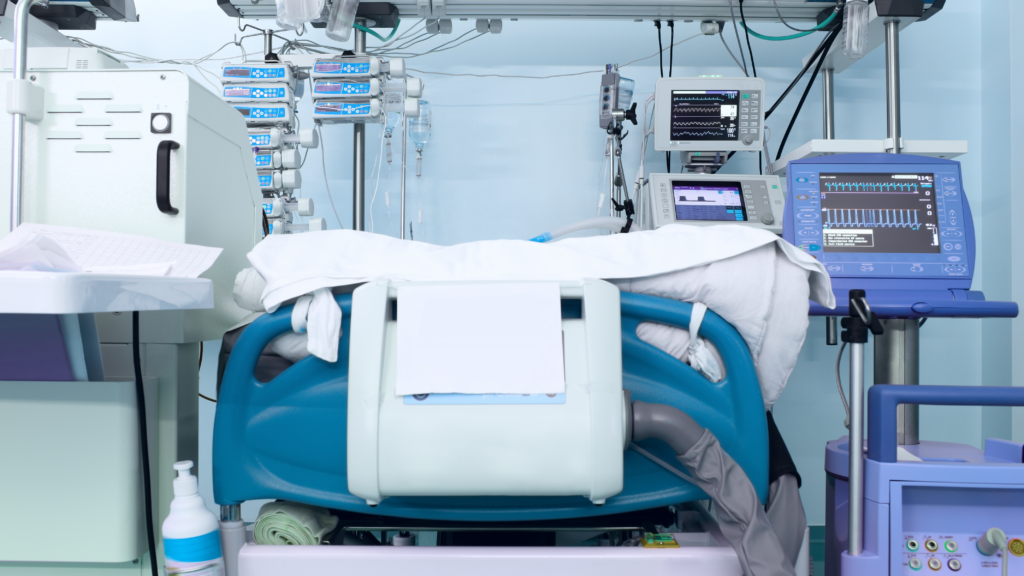
| Equipment | Purpose | How It Helps |
| Cardiac Monitor | Tracks heart rate and rhythm | Detects irregularities early |
| Pulse Oximeter | Measures oxygen saturation | Flags breathing problems quickly |
| Ventilator / BiPAP | Supports or assists breathing | Essential for respiratory failure patients |
| Oxygen Concentrator | Supplies continuous oxygen | Manages low oxygen levels |
| Suction Machine | Clears airway secretions | Prevents choking and infection in tracheostomy patients |
| Infusion Pump | Delivers IV fluids/medication at controlled rates | Ensures accurate dosing |
| Feeding Pump / Ryles Tube Setup | Provides nutrition for patients who cannot eat orally | Maintains nutritional support |
| Hospital Bed | Adjustable positioning | Prevents bedsores, aids comfort |
| Nebulizer | Delivers respiratory medication | Eases breathing difficulties |
| Emergency Crash Kit | Basic resuscitation supplies | First response before hospital transfer |
ICU Nurse Responsibilities
An ICU-trained nurse working in a home setting is responsible for far more than basic care. Their day-to-day responsibilities typically include monitoring vital signs at scheduled intervals, administering medications accurately and on time, managing ventilator or oxygen equipment, maintaining airway hygiene for tracheostomy or ventilator patients, keeping detailed clinical documentation, recognizing early warning signs of deterioration, coordinating with the doctor for updates, and guiding family members on safe patient handling.
Because these nurses work without the immediate backup of an entire hospital team, experience and clinical judgment matter enormously. Families should always verify a nurse’s ICU training and certification before engaging any Home ICU Services provider.
Doctor’s Role
The treating doctor’s involvement does not stop once the patient goes home. In a well-run Home ICU Services setup, the doctor typically reviews nursing documentation regularly, conducts periodic in-person or virtual reviews, adjusts medications and treatment plans as the patient’s condition evolves, and decides whether the patient needs to be readmitted to a hospital.
This ongoing physician oversight is what separates genuine ICU Care at Home from unsupervised home nursing. Without a doctor actively monitoring progress, the “ICU” label in Home ICU Services means very little.
Benefits of ICU Care at Home
1. Comfort and Familiar Environment: Recovering in a familiar home environment can help patients feel more relaxed, emotionally supported, and connected with their loved ones. This can contribute to a more positive recovery experience.
2. Personalized One-to-One Care: ICU Care at Home often includes dedicated one-to-one support from experienced healthcare professionals, allowing care plans to be tailored to the patient’s specific medical needs and daily routine.
3. Care in a Controlled Home Setting: For patients who are medically suitable for home-based intensive care, receiving treatment in a well-prepared home environment can provide comfort while maintaining the required medical supervision and safety protocols.
4. Greater Family Involvement: Family members can stay closely involved in the patient’s care, communicate directly with healthcare professionals, and better understand the recovery process without the limitations of scheduled visiting hours.
5. Smooth Transition After Hospital Discharge: ICU Care at Home can help ensure continuity of medical care after hospital discharge. It supports patients who still require intensive nursing, monitoring, or medical equipment while continuing their recovery at home.
6. Cost-Effective for Eligible Patients: Depending on the patient’s medical condition and care requirements, ICU Care at Home may be a cost-effective option for those who no longer require inpatient hospitalization but still need advanced medical support. The suitability and overall cost vary from case to case.
7. Customized Recovery Plan: Every patient has unique healthcare needs. ICU Care at Home allows doctors and healthcare professionals to create a personalized care plan that can be adjusted as the patient’s condition improves.
8. Better Quality of Life During Recovery: Being close to family, following familiar routines, and receiving professional medical care at home can help many patients experience greater comfort and confidence throughout their recovery journey.
How Doctors Decide if a Patient Can Shift Home
Doctors typically use a checklist-style evaluation before approving a shift from hospital ICU to Home Intensive Care. This generally includes confirming that:
- Vital signs have been stable for a defined period
- The patient does not require minute-to-minute intervention
- Any ventilator or oxygen support needs are manageable with portable equipment
- The patient’s medication regimen is settled and predictable
- A qualified ICU-trained nurse is available for the required hours
- The family has been briefed and agrees to the responsibilities involved
- The home has adequate space, electricity backup, and hygiene standards
- A clear emergency transfer plan to a hospital is documented in advance
- The treating doctor is available for ongoing remote or in-person supervision
If any of these conditions cannot be met, hospital-based care remains the safer option.
Preparing Your Home for ICU Care
Setting up for ICU Care at Home involves more than buying equipment. Families are generally guided through steps such as:
- Assessing the space – A quiet room with enough space for a hospital bed, monitoring equipment, and movement around the patient.
- Ensuring reliable electricity – Backup power (inverter or generator) is essential since equipment like ventilators and monitors cannot lose power.
- Arranging equipment – Renting or purchasing the specific equipment recommended by the treating doctor.
- Hiring qualified staff – Confirming the nursing agency provides ICU-certified professionals, not general caregivers.
- Setting up hygiene protocols – Handwashing stations, clean linens, and waste disposal systems to prevent infection.
- Creating an emergency plan – Keeping the nearest hospital’s contact details, ambulance numbers, and a documented transfer protocol visible and accessible.
- Training family members – Learning basic monitoring, repositioning techniques, and warning signs to watch for.
Common Mistakes Families Make
- Choosing a provider based only on price, without checking nurse qualifications
- Assuming “home nursing” and “ICU Care at Home” are the same thing
- Not confirming that the treating doctor has approved the discharge plan
- Skipping the emergency transfer plan because “it probably won’t be needed”
- Underestimating how physically and emotionally demanding home-based critical care can be for family caregivers
- Not asking for daily documentation or clinical updates
- Delaying a hospital transfer out of hope, when the nurse or doctor has flagged deterioration
Signs That a Patient May Need ICU Care at Home
Families and even doctors often look for these indicators when considering Home ICU Services:
- Recent discharge from a hospital ICU with ongoing monitoring needs
- Dependence on a ventilator, BiPAP, or oxygen support that is otherwise stable
- Recovery from major surgery with a need for close observation
- Chronic conditions like advanced COPD with fluctuating symptoms
- Tracheostomy care requirements
- A doctor’s specific recommendation for continued intensive monitoring after discharge
Is ICU Care at Home Safe?
ICU Care at Home can be safe when it is provided by qualified ICU-trained nurses, supervised by a treating physician, equipped with appropriate monitoring devices, and backed by a clear emergency transfer plan. It is not safe for patients who are hemodynamically unstable or require complex, minute-to-minute hospital-level intervention.
Safety in ICU Care at Home depends almost entirely on three factors: the qualifications of the staff, the quality and appropriateness of the equipment, and the existence of a real emergency plan. When all three are in place, and the treating doctor has approved the transition, Home Intensive Care can be a genuinely safe and effective option for the right patient. When any of these factors are missing, the risk increases significantly.
Families should never treat ICU Care at Home as a lower-effort alternative to hospital care. It requires just as much diligence — arguably more, since there is no built-in hospital infrastructure as a backup.
Cost Factors of ICU Care at Home in India
Rather than quoting specific prices — which vary widely by city, provider, and patient condition — it’s more useful to understand what actually drives the cost of ICU Care at Home in India:
- Duration of care – Round-the-clock nursing costs more than fixed-shift care.
- Staffing level – Whether one nurse covers 24 hours or multiple nurses rotate in shifts.
- Equipment needs – Ventilator or dialysis-related equipment costs more than basic monitoring devices.
- Doctor visit frequency – More frequent physician visits or telemedicine reviews add to cost.
- Equipment rental vs. purchase – Short-term needs are usually cheaper to rent; long-term needs may be cheaper to purchase.
- City and provider – Metro cities generally have higher rates than smaller towns.
- Complexity of the patient’s condition – A tracheostomy or ventilator-dependent patient requires more resources than a patient needing only monitoring.
Families are strongly advised to request a detailed, itemized cost breakdown from any Home ICU Services provider before committing, rather than relying on a flat estimate.
How to Choose the Right ICU Care Provider
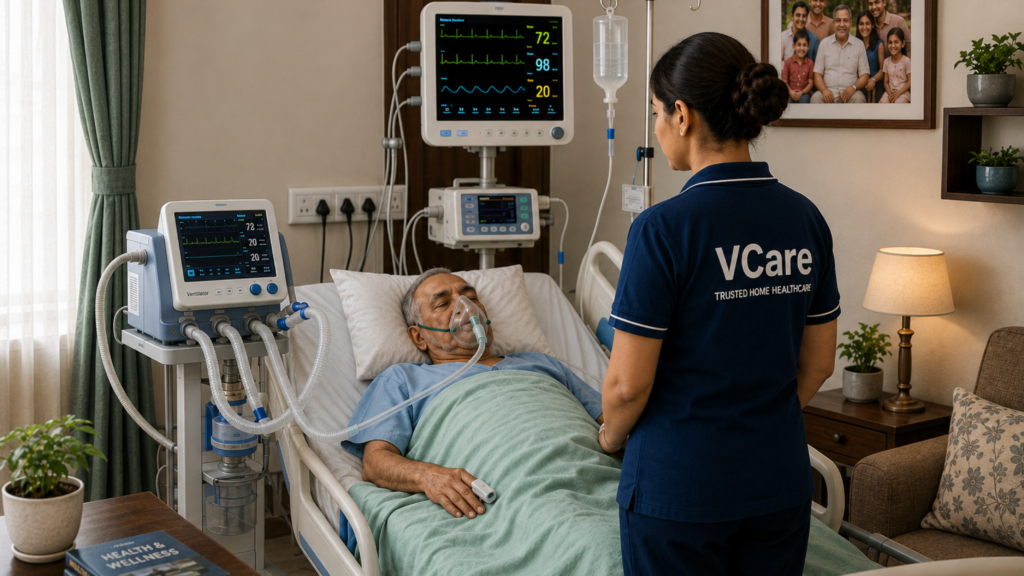
When evaluating a home ICU care provider, consider these key points:
- Experience: The provider should have at least 10 years of experience in the field, ensuring trust and expertise.
- Staff Availability: They should have a full, well-trained team so that there are no shortages, even during staff leaves.
- Emergency Hospital Tie-Up: Ensure they have a tie-up with a hospital, so in case of an emergency, they can arrange a hospital transfer quickly.
- Verified Nurses: The nursing staff should be fully trained, certified, and their qualifications should be verified.
- Equipment: Ensure the equipment is well-maintained and appropriate for your specific medical needs.
- Transparent Pricing: They should provide clear, itemized pricing so you know exactly what you’re paying for.
- Communication: They should share daily updates and maintain clear communication with the family.
- Responsiveness: They should be available to answer questions, even during odd hours.
- Collaboration: They should coordinate directly with your treating hospital or doctor to ensure a seamless care plan.
By keeping these factors in mind, you can find a provider with both the experience and infrastructure to support your loved one’s care.
Frequently Asked Questions
1. Can ICU treatment really be given at home?
Yes, for patients who are medically stable but still need intensive monitoring, equipment, or nursing support. It must be approved and supervised by the treating doctor.
2. Who needs ICU Care at Home?
Patients recovering from stroke, major surgery, trauma, or those who are ventilator-dependent but stable, and no longer need full hospital ICU infrastructure.
3. How long can ICU Care continue at home?
This varies by patient. Some need it for a few weeks during recovery, while chronic or long-term cases may require it for months, based on ongoing physician evaluation.
4. Is Home ICU expensive?
Costs depend on staffing hours, equipment needs, and the patient’s condition. It’s best to request a detailed cost breakdown from providers rather than assume a fixed price.
5. Can ventilators be used at home?
Yes, portable ventilators can be used at home for stable patients, but only with trained staff, proper equipment maintenance, and physician oversight.
6. What diseases require Home ICU?
Conditions like stroke, COPD, post-cardiac surgery recovery, trauma, tracheostomy care, and certain neurological disorders commonly require Home ICU Services.
7. How do doctors monitor patients at home?
Through regular review of nursing documentation, periodic in-person or virtual check-ins, and real-time updates on vital signs and any changes in condition.
8. Can elderly patients receive ICU Care at Home?
Yes, elderly patients are often good candidates, provided their condition is stable and the home environment can support the required equipment and care.
9. What is the difference between home nursing and ICU Care at Home?
Home nursing typically covers general care and daily assistance. ICU Care at Home involves ICU-trained nurses, specialized equipment, continuous monitoring, and physician supervision for medically fragile patients.
10. What happens if the patient’s condition worsens at home?
A properly run Home ICU Services provider will have a documented emergency protocol, including immediate doctor notification and a plan for rapid hospital transfer.
Final Thoughts
ICU Care at Home is neither a miracle solution nor a risky shortcut — it is a legitimate extension of medical care for the right patient, under the right supervision. For families navigating a loved one’s recovery, understanding what it actually involves — the staff, the equipment, the monitoring, and the honest limitations — makes it far easier to make a calm, informed decision rather than a rushed one.
The most important step, always, is this: any decision to move from hospital to Home Intensive Care should be made in direct consultation with the treating physician, based on the patient’s actual medical condition — not convenience, cost alone, or urgency to leave the hospital.
If your family is currently facing this decision, take the time to ask providers the right questions, involve your doctor at every step, and choose a setup that prioritizes safety over speed.


