


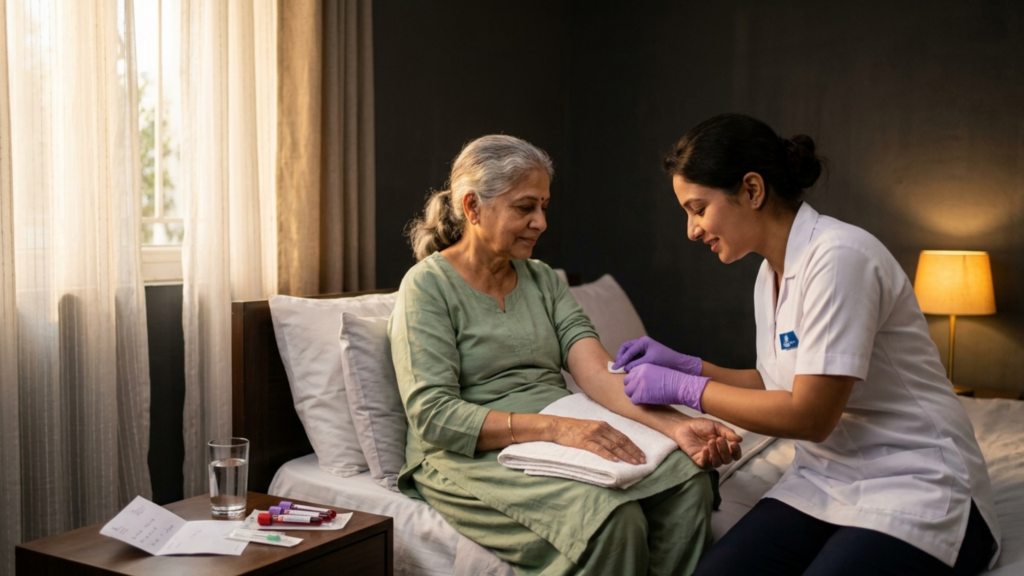
You’ve done everything right. You called the doctor. You got the prescription. You booked a blood test at home so your mother doesn’t have to go through the exhausting ritual of a lab visit. The professional is coming at 8 AM. You feel organised.
But here’s what nobody tells you — a blood test doesn’t begin when the needle goes in. It begins the night before. Sometimes even two days before. What your loved one eats, drinks, how much they sleep, what medicines they take, whether they’ve exercised — all of it quietly shapes the result sitting in that report.
And when a result comes back slightly off because of something avoidable, it causes worry. Sometimes unnecessary re-tests. Sometimes a wrong treatment direction.
This guide exists so that doesn’t happen to you. Whether this blood test is for you, your parents, your spouse, or your child — read this fully, follow it carefully, and you’ll give the test every chance to tell the true story of your health.
Why Preparation Matters More Than You Think
Blood is not just a liquid. It is a living snapshot of everything happening inside your body at a given moment. It responds to what you eat within hours. It shifts with stress. It changes after exercise. It is affected by alcohol, certain vitamins, even the position you were sitting in.
Labs test blood under the assumption that standard preparation has been followed. When it hasn’t, the numbers can be misleading — and a misleading number in a blood report is one of the most dangerous things in medicine, because it looks like a fact even when it isn’t.
Getting a blood test at home is a thoughtful, caring choice. Preparing for it correctly is the natural next step — and honestly, it is not complicated. It just requires a little awareness.
Let’s go through it properly.
THE DO’S: What You Should Do Before a Blood Test at Home

✅ Do Fast If Your Test Requires It
This is the single most important instruction for many common blood tests. Fasting means no food and no drinks other than plain water for 8 to 12 hours before the test.
Tests that almost always require fasting include:
- Fasting Blood Sugar (FBS)
- Lipid Profile (cholesterol and triglycerides)
- Fasting Insulin
- Blood Urea Nitrogen (BUN) in some cases
- Liver Function Tests (in some labs)
If you eat before a fasting test — even a light snack — your blood glucose spikes, your triglycerides rise, and your liver enzymes can shift. The result will not reflect your true baseline. It will reflect your breakfast.
For elderly patients especially, it can be tempting to give them a small bite “just so they don’t feel weak.” Resist this temptation. If you are worried about weakness or low sugar, inform your doctor beforehand — they may schedule the test differently or advise a small adjustment.
When in doubt, always ask your healthcare provider which of your prescribed tests require fasting.
✅ Do Drink Enough Plain Water
This one surprises many people: staying well hydrated before a blood test is not just allowed — it is actively recommended.
Dehydration makes veins smaller, harder to locate, and harder to draw from. This is especially true for elderly patients, whose veins may already be delicate and rolling. A well-hydrated body makes the collection faster, easier, and far more comfortable.
Drink 2 to 3 glasses of plain water the evening before and a glass or two on the morning of the test. Water does not affect the accuracy of fasting tests — it only helps.
The only exception: if your test specifically restricts water intake (which is very rare and your doctor will explicitly tell you), follow those specific instructions.
✅ Do Inform the Phlebotomist About All Medications
Before the collection begins, tell the phlebotomist every medicine your loved one is currently taking — prescription drugs, over-the-counter tablets, supplements, vitamins, and herbal remedies. All of them.
Many medications affect blood test results. Blood thinners affect clotting tests. Biotin (Vitamin B7) supplements can interfere with thyroid and hormone tests. Steroids affect blood sugar and white cell counts. Iron supplements affect ferritin levels. Even aspirin affects certain panels.
Your doctor knows what to expect if you’ve disclosed your medications — but the lab needs to know too so they can interpret results accurately. Don’t assume a supplement is too small to matter. In blood testing, sometimes the smallest things shift the biggest numbers.
✅ Do Have a Good Night’s Sleep
Sleep affects cortisol levels, blood sugar, certain hormones, and inflammatory markers. A night of poor or broken sleep — common in elderly patients — can cause small but meaningful fluctuations in some test results.
Try to ensure your loved one gets a reasonably restful night before the test. No late-night TV. A comfortable sleeping environment. If they have chronic insomnia, mention this to your doctor when reviewing the results.
For you as the caregiver, good sleep also means you’re calm and organised in the morning — which makes the entire appointment smoother for everyone.
✅ Do Book Your Slot at the Right Time of Day
For fasting tests, early morning is ideal — usually between 7 AM and 10 AM. By then, the fasting window has been comfortably completed overnight, and patients haven’t had to remain hungry for long hours during the waking day (which can be stressful and uncomfortable, especially for diabetics and elderly patients).
Certain hormone tests — such as testosterone and cortisol — have natural peaks in the morning and may specifically require early-morning collection. Your doctor will usually specify this.
For non-fasting tests, timing is more flexible, though most providers recommend avoiding the post-meal window (roughly 1 to 2 hours after eating) for cleaner baseline results.
✅ Do Keep the Prescription and Reports Ready
When the phlebotomist arrives, have the doctor’s prescription visible. If this is a follow-up test and you have previous reports, keep them accessible. This helps the collection professional label samples correctly, confirm the right tests are being drawn, and flag any inconsistencies before, not after.
For elderly patients on complex treatment plans, this step is more important than it seems. Mixing up test names or missing a test from the panel is easily avoided when the prescription is right there.
✅ Do Create a Calm, Comfortable Environment
This is the quiet thing that nobody puts on a medical checklist — but it matters deeply.
A blood test, even at home, can feel like a clinical event. Some elderly patients feel anxious. Some children are frightened. Even calm adults can feel a small spike of nervousness.
Set up a comfortable spot before the phlebotomist arrives. A familiar chair or bed. A calm room, not a crowded one. Keep the environment unhurried — don’t rush your loved one out of bed at the last minute, hastily dress them, and then expect them to sit still with a steady arm.
Calm preparation leads to calmer veins, better cooperation, and a more comfortable experience. It is also, simply, the kind, human thing to do.
THE DON’TS: What You Must Avoid Before a Blood Test at Home

❌ Don’t Eat or Drink Anything Except Water (For Fasting Tests)
No tea. No coffee. No juice. No biscuits. No milk. Not even a small piece of fruit.
This is often the hardest part, especially in Indian households where offering chai in the morning is almost an act of love. But even a cup of tea with milk and sugar can alter fasting glucose and lipid levels significantly.
If the person being tested is diabetic and becoming unwell due to low blood sugar, that is a medical situation and should be managed with your doctor’s guidance — not by quietly giving them a snack and hoping the test will still be accurate.
For non-fasting tests, a light, normal meal is fine. But avoid heavy, fatty meals in the hours immediately before, as they temporarily elevate triglycerides and can affect certain panels.
❌ Don’t Exercise Before the Test
Avoid all forms of exercise for at least 24 hours before a blood test — especially before tests like:
- Creatine Kinase (CK) or CK-MB (for cardiac or muscle assessment)
- Creatinine and kidney function tests
- Complete Blood Count (CBC) — exercise temporarily raises white cell count
- Blood glucose — exercise lowers sugar and masks real levels
Even a morning walk on the day of the test is worth skipping. This applies to gym workouts, yoga, physiotherapy exercises, and walks. Rest is the preparation here.
For elderly patients recovering from illness or surgery, this is usually not an issue — but it is worth knowing, because sometimes well-meaning family members encourage “a little morning walk” before the test.
❌ Don’t Take Supplements the Morning of the Test (Unless Doctor Says Otherwise)
Many people take Vitamin D, Vitamin B12, biotin, omega-3, iron, or multivitamin supplements daily. On the morning of a fasting blood test, hold these until after the collection is done — unless your doctor has specifically told you to continue them.
The reason is that these supplements can directly interfere with several common tests. High-dose biotin is particularly known to cause falsely elevated or falsely lowered results in thyroid panels, hormone tests, and even certain cancer markers. It is a widely documented issue that many patients are unaware of.
When in doubt, skip the morning supplement and take it right after the test is done.
❌ Don’t Consume Alcohol 24–48 Hours Before
Alcohol affects the liver, alters blood sugar levels, raises uric acid, elevates triglycerides, and disrupts liver enzyme readings. Most standard blood panels — LFT, lipid profile, blood sugar, uric acid — will show distorted results in someone who has had alcohol within 24 to 48 hours.
A drink the night before a lipid profile, for example, can push triglycerides dramatically higher — causing unnecessary alarm and potentially leading to misguided treatment.
If your family member or patient has consumed alcohol in the 48 hours before a scheduled blood test, it is better to reschedule than to get a result that may lead down the wrong diagnostic path.
❌ Don’t Smoke on the Morning of the Test
Smoking before a blood test, even a single cigarette, can affect:
- White blood cell count (smoking acutely raises WBC)
- Blood glucose (nicotine affects insulin sensitivity)
- Carbon monoxide levels (affects RBC interpretation)
- Certain lipid values
Ask the person being tested to avoid smoking from the previous night until after the sample is collected. It is a small ask for a result that reflects their true health.
❌ Don’t Apply Lotion or Oil on the Arms
On the morning of the test, avoid applying body lotion, oil, or cream on the arms — particularly around the inner elbow (antecubital fossa), which is the most common site for blood draw.
Oils and lotions make it harder to properly clean the skin before the needle insertion, which matters for sterility. They can also make it physically harder to see and palpate veins. A clean, dry arm makes the collection easier and safer.
❌ Don’t Panic or Rush — It Makes Everything Harder
This is the don’t that is almost never written down, but ask any experienced phlebotomist and they will confirm it.
Anxiety causes blood vessels to constrict. A rushed, stressed patient — or a patient who has been hurried and flustered — will have tighter, more elusive veins. The draw becomes harder. Sometimes it takes more than one attempt. For elderly patients with already fragile veins, emotional stress makes everything more difficult.
Take your time. Breathe. The professional coming to your home is trained and patient. The whole purpose of a home blood test is that there is no rushing — no number queue, no stranger behind you, no parking ticket ticking away. Use that calm. Let it work in your favour.
A Quick Handy Checklist
The Evening Before:
- Stop eating 8–12 hours before (if fasting test)
- Drink enough plain water
- Avoid alcohol completely
- Get a good night’s sleep
- Keep prescription and old reports ready
The Morning of the Test:
- Drink 2 glasses of plain water
- Do not eat, drink tea/coffee, or smoke
- Skip morning supplements unless told otherwise
- Do not exercise
- Keep arms clean — no lotion or oil
- Set up a calm, comfortable spot at home
How VCare@Home Makes the Entire Experience Easier
Preparation is your part. But who you trust to show up at your door — that matters just as much.
At VCare@Home, our blood test at home service was designed for the people who find lab visits genuinely difficult — the elderly, the recovering, the bedridden, and the chronically ill. We built this service because we’ve seen firsthand, through our nursing and elder care work, just how much unnecessary stress a simple blood test can cause when the system isn’t designed around the patient.
Here’s what we bring to your door:
Trained, certified phlebotomists who are experienced with elderly and fragile patients — calm, skilled, and unhurried, even with the most difficult veins.
Fully sterile, sealed collection kits — every needle, tube, and swab is brand new and tamper-proof. We never reuse. We never compromise.
Proper cold-chain sample transport — your sample travels to the lab exactly as it should, preserving its integrity throughout.
Reports on WhatsApp and email — so your doctor has what they need without delay, and you aren’t making a second trip to collect paperwork.
Genuine care, not just service — VCare@Home was built on the belief that the people who once cared for us deserve care that comes to them. Our phlebotomists know that the person sitting in that chair is someone’s parent, someone’s partner, someone’s whole world. They treat them accordingly.
To book your home blood collection, visit vcareathome.com/blood-test-at-home or call/WhatsApp us at 7822966966.
Conclusion
A blood test is a small thing in the grand picture of healthcare. But it holds enormous power — because the numbers it produces guide every treatment, every decision, every prescription that follows.
When you take the time to prepare properly before a blood test at home, you are not just following instructions. You are protecting the accuracy of something that may directly shape the health of someone you love. You are making sure that the care they receive going forward is based on the truth of what’s happening inside them — not on a result distorted by a cup of chai or a forgotten supplement.
That’s not a small thing. That is love in a practical form.
Prepare well. Trust the process. And let the result tell the real story — because that story, told clearly and honestly, is the foundation of everything that helps them heal.


